
Hello friends, this is Chatty Jackie.
If you use WhatsApp to stay connected with family, friends, church groups, travel companions, or community organizations, this update is important.
There has been online chatter about a possible “CCD WhatsApp scam.” While there is no verified advisory using that specific name, here’s what matters most: WhatsApp scams are increasing, and scammers are becoming more convincing, more urgent, and more targeted—especially toward older adults.
Below is a clear breakdown of the most common WhatsApp scams circulating right now, what to watch for, and how to protect yourself.
 The Most Common WhatsApp Scams Right Now
1. Account Takeover via “Linked Devices” (GhostPairing Scam)
This newer scam exploits WhatsApp’s linked-device feature.
Scammers attempt to trick users into entering a pairing or verification code. Once successful, they can:
- Read messages
- Send messages pretending to be you
- Target your contacts using your identity
Important reminder:
No one should ever ask you for a WhatsApp verification or pairing code.
2. Impersonation of Authorities and “Digital Arrest” Threats
In this scam, criminals pose as:
- Law enforcement
- Government agencies
- Cybercrime departments
Victims are told they are under investigation and must act immediately to avoid arrest or penalties.
Fact:
Legitimate authorities do not contact individuals on WhatsApp to demand money, information, or urgent action.
3. “Dial This Code” Call-Forwarding Scams
Some messages instruct users to dial special phone codes, often claiming it is necessary for security or account verification.
What actually happens is call and message forwarding may be activated, allowing scammers to intercept one-time passcodes and sensitive calls.
Never dial unfamiliar codes sent through messages.
4. Verification Code Sharing Scam
This long-running scam continues to succeed because it feels familiar.
A scammer attempts to access your account, triggering a verification code sent to your phone. They then contact you—often posing as a friend or support agent—and ask you to share that code.
Sharing it gives them full access to your account.
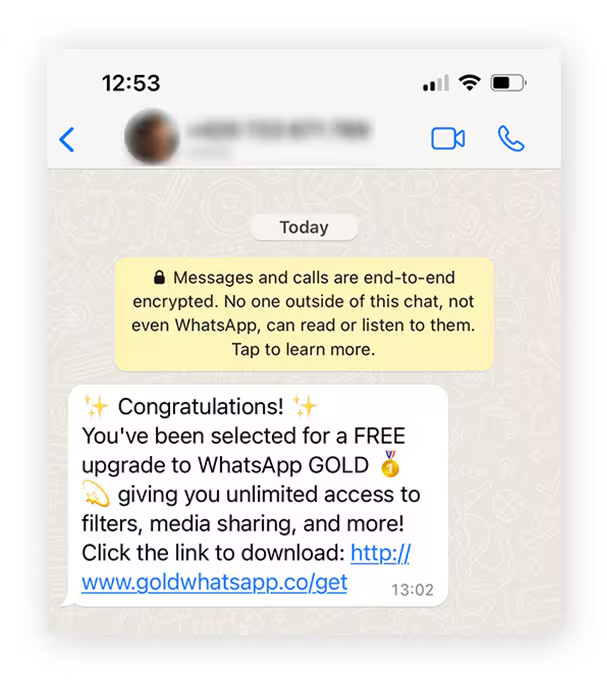
5. Fake Links, Attachments, and “Important Documents”
Scammers frequently send messages claiming to include:
- Bank alerts
- Delivery notifications
- Account updates
- PDF attachments or download links
Clicking these links can install malware or redirect you to fake websites designed to steal your information.
If you were not expecting the message, do not open it.
Why These Scams Are So Effective
Scammers rely on:
- Urgency
- Fear
- Authority
- Familiar names or scenarios
Anyone can be caught off guard, especially when tired, busy, or distracted. Awareness—not embarrassment—is the strongest defense.
Chatty Jackie’s WhatsApp Safety Checklist
- Never share verification or pairing codes
- Enable two-step verification in WhatsApp settings
- Review linked devices regularly
- Avoid clicking unexpected links or attachments
- Do not dial codes sent by strangers
- Pause and verify before responding to urgent messages
Final Thoughts from Chatty Jackie
While there may not be a scam officially labeled “CCD WhatsApp,” the threat landscape is very real and constantly evolving.
The good news is that staying informed makes a significant difference. You do not need advanced technical skills—just a cautious mindset and a willingness to pause before reacting.
Staying alert helps protect not only you, but also your family, friends, and community.